High-pressure industrial environments demand precision. When pipes carry volatile substances under immense pressure, even a microscopic gap in a flange connection can lead to catastrophic leaks, safety hazards, and costly downtime. This is where the science of torquing becomes critical.
Ensuring bolt tightness isn’t just about using a wrench; it’s about achieving the exact tension required to maintain seal integrity under stress. From oil refineries to chemical processing plants, the methods used to secure these connections determine the safety and efficiency of the entire operation.
In this article, we will explore the specific challenges of high-pressure environments, the differences between hydraulic and pneumatic torquing, and why specialized expertise is non-negotiable for industrial piping systems.
Key Takeaways
- Precision is paramount: High-pressure environments require exact tensioning to prevent leaks and catastrophic failures.
- Method matters: Understanding when to use hydraulic versus pneumatic torquing ensures efficiency and safety.
- Expertise reduces risk: Partnering with a specialized on-line industrial piping company minimizes downtime and enhances operational safety.
The Stakes of High-Pressure Environments
Industrial piping systems are the veins of the manufacturing and energy sectors. They transport steam, chemicals, oil, and gas at pressures that can exceed thousands of pounds per square inch (PSI). In these conditions, standard tightening methods fall short.
The primary goal of torquing is to stretch the bolt slightly, creating a clamping force that holds the flange faces together. If the tension is too low, the internal pressure will force the seal open, causing a leak. If the tension is too high, the bolt can yield or the flange can warp, also resulting in failure.
Factors influencing these connections include:
- Thermal Cycling: Rapid changes in temperature cause metals to expand and contract, loosening bolts over time.
- Vibration: Constant machinery vibration can gradually back off nuts if they aren’t properly tensioned.
- Corrosion: Harsh chemical environments can degrade fastener integrity.
To combat these variables, professionals utilize controlled bolting techniques known as hydraulic and pneumatic torquing.
Hydraulic vs. Pneumatic Torquing: Choosing the Right Tool
While the goal is the same—accurate bolt tensioning—the tools used to achieve it vary based on the application, accessibility, and required torque values.
Hydraulic Torquing
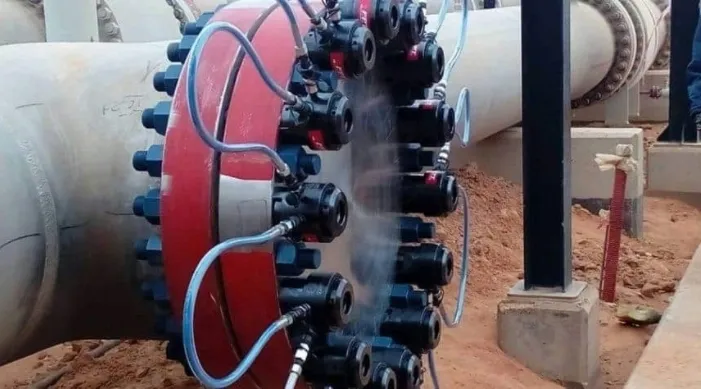
Hydraulic torquing is the heavy lifter of the industry. It uses hydraulic fluid to generate massive amounts of force, making it ideal for large-diameter bolts and extremely high-pressure flanges.
How it works: A hydraulic pump pushes fluid into a cylinder, extending a piston that turns the nut. This method allows for precise control over the applied torque, often accurate within +/- 3%.
Key Benefits:
- High Power-to-Weight Ratio: It delivers immense power in a relatively compact package, essential for heavy-duty applications.
- Accuracy: It offers superior consistency, ensuring every bolt on a flange is tightened to the exact same specification.
- Safety: It removes the need for manual force, reducing operator fatigue and injury risk.
Pneumatic Torquing
Pneumatic torquing utilizes compressed air to drive a gearbox multiplier. It offers a continuous rotation, which makes it significantly faster than hydraulic ratcheting tools.
How it works: An air motor spins a series of gears to multiply the input torque. The continuous rotation means the nut is run down quickly and tightened smoothly.
Key Benefits:
- Speed: It is generally faster than hydraulic methods, making it ideal for projects with high bolt counts and tight deadlines.
- Cleanliness: Pneumatic tools are often cleaner to operate as they don’t rely on hydraulic fluid, which can leak.
- Vibration-Free: The smooth application of force prevents damage to the tool and the fastener.
At SEALTEC, we determine the appropriate method based on the specific constraints of the site and the mechanical requirements of the joint.
The Role of an On Line Industrial Piping Company
Many facility managers attempt to handle bolting in-house, but the risks associated with high-pressure systems often necessitate a specialized partner. An experienced on-line industrial piping company brings more than just tools to the table; they bring methodology and accountability.
Leak Prevention and Integrity Management
Specialized technicians understand the “pattern” of tightening. You cannot simply tighten bolts in a circle; you must follow a star or cross pattern to ensure the flange compresses evenly. Uneven compression crushes the gasket on one side while leaving a gap on the other—a recipe for a blowout.
Hot Bolting and Live Repair
In some cases, bolts must be replaced or tightened while the system is still live (under pressure). This process, known as “hot bolting,” requires exceptional skill and safety protocols. It allows plants to perform maintenance without shutting down production, saving significant revenue. However, it should only be performed by certified technicians using controlled hydraulic & pneumatic torquing equipment.
Documentation and Compliance
Regulatory bodies often require proof of joint integrity. Professional services provide detailed reports including the torque values applied, the tools used, and the condition of the flange faces. This documentation is vital for audits and insurance purposes.
Why Quality Assurance is Non-Negotiable
The cost of a leak goes far beyond the repair bill. Environmental cleanup costs, regulatory fines, and injury liabilities can bankrupt a project.
SEALTEC prioritizes a rigorous Quality Assurance/Quality Control (QA/QC) process. Before a tool touches a bolt, calculations are verified against the flange and gasket specifications. Technicians inspect the condition of the threads and the lubrication used, as friction creates resistance that can give false torque readings.
By controlling friction through proper lubrication and using calibrated hydraulic & pneumatic torquing tools, we ensure that the torque reading on the gauge translates into actual clamping force on the joint.
Ensuring Operational Safety with SEALTEC
Managing high-pressure systems requires a zero-tolerance policy for error. The difference between a secure seal and a hazardous leak often comes down to the specialized knowledge of the technician and the precision of their tools.
Whether your facility requires the raw power of hydraulic tools or the speed of pneumatic systems, choosing the right partner is the first step toward operational integrity. At SEALTEC, we are dedicated to providing the technical expertise and advanced torquing solutions necessary to keep your plant running safely and efficiently.