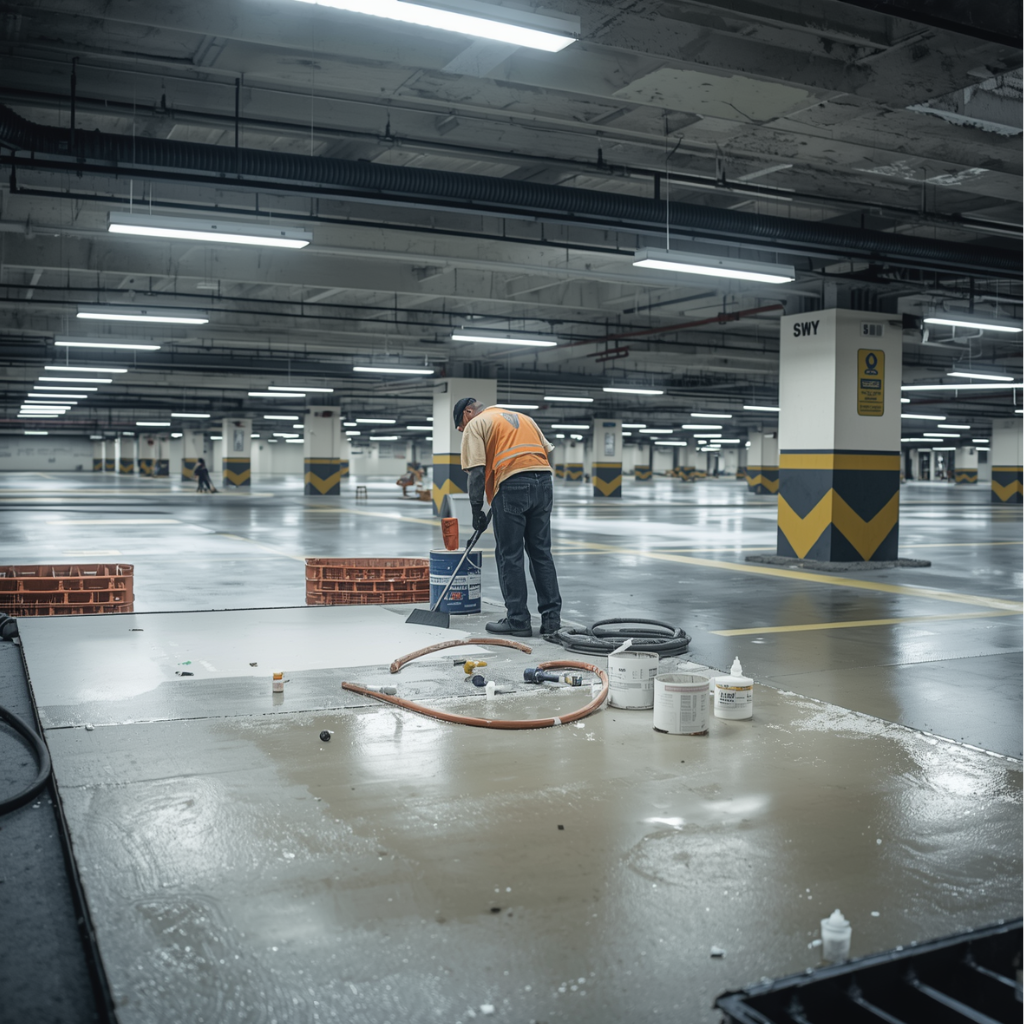
Quick answer: The most common parking garage waterproofing problems include cracked concrete, failing joint sealants, pooling water, and corroded rebar. Most stem from water intrusion that goes unaddressed. Regular inspections, proper drainage, and timely concrete waterproofing prevent these issues from turning into costly structural repairs.
Water is a parking garage’s worst enemy. Every time it rains or snow melts, moisture seeps into tiny cracks, freezes, expands, and slowly tears concrete apart. Add road salt, car fluids, and constant traffic to the mix, and you have a structure under near-constant attack.
The good news? Most of these problems are preventable. With the right approach to parking garage waterproofing, you can extend the life of your structure, avoid expensive emergency repairs, and keep drivers safe. At Seal Tec, we’ve seen how small issues snowball into major headaches when maintenance gets pushed down the priority list.
This post breaks down the most common waterproofing problems we encounter, why they happen, and the practical steps you can take to stop them before they start.
Key Takeaways
- The leading causes of parking garage damage are water intrusion, freeze-thaw cycles, and chemical exposure from road salts and vehicle fluids.
- Routine inspections and proactive parking structure maintenance are far cheaper than emergency structural repairs.
- A complete waterproofing system—membranes, joint sealants, and proper drainage—protects both the concrete and the steel reinforcement inside it.
Why does water cause so much damage in parking garages?
Concrete looks solid, but it’s actually porous. Water finds its way into the smallest openings, and once inside, it sets off a chain reaction.
In colder climates, that water freezes and expands by roughly 9%. This pressure widens existing cracks with every freeze-thaw cycle. Over time, the surface flakes and crumbles—a process called spalling.
There’s also a hidden threat below the surface. Most parking structures rely on steel rebar for strength. When water and chloride from road salt reach that steel, it corrodes and expands, pushing against the surrounding concrete until it cracks from the inside out. This is one of the most expensive forms of parking garage repair because it compromises the structure itself.
What are the most common parking garage waterproofing problems?
Cracked and spalling concrete
Cracks are usually the first warning sign. They start small, but each one creates a path for water to travel deeper into the slab. Left alone, hairline cracks grow into wide fractures, and the surface begins to chip and flake.
The fix starts with sealing cracks early and applying a quality concrete waterproofing coating. Once spalling begins, repairs become more involved and more expensive.
Failing expansion joints and sealants
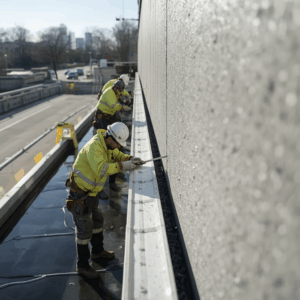
Parking garages expand and contract with temperature changes, which is why expansion joints exist. The sealants in these joints take a beating. They dry out, crack, and pull away from the concrete, opening direct channels for water.
Failed joint sealant is one of the most overlooked problems we find during inspections. Replacing worn sealants on schedule is a simple, affordable part of parking structure maintenance.
Pooling and standing water
Water should drain off a parking deck quickly. When it pools instead, it usually points to clogged drains, poor slope, or a failing waterproof membrane. Standing water accelerates concrete deterioration and creates slip hazards for pedestrians.
Keeping drains clear and ensuring the deck has proper slope are basic but critical steps that often get neglected.
Worn or damaged waterproof membranes
The waterproof membrane is your first line of defense. Traffic, UV exposure, and chemical spills wear it down over time. Once the membrane fails, water reaches the concrete directly.
A good membrane system can last many years, but only if it’s inspected and reapplied before it breaks down completely.
Corroded steel reinforcement
When you see rust stains bleeding through the concrete or large sections of the surface breaking loose, the rebar underneath is likely corroding. This is the most serious problem on this list because it threatens load-bearing capacity.
Catching corrosion early through inspections is the only way to avoid major structural parking garage repair.
How can you prevent these waterproofing problems?
Prevention always costs less than repair. Here’s how to stay ahead of the damage:
- Schedule regular inspections. A professional inspection at least once or twice a year catches small problems while they’re still cheap to fix.
- Keep drainage systems clear. Clean drains and trench grates regularly so water moves off the deck instead of sitting on it.
- Reseal joints and cracks on a schedule. Don’t wait for sealant to fail completely. Proactive resealing is a cornerstone of parking structure maintenance.
- Maintain the waterproof membrane. Reapply protective coatings before they wear through to bare concrete.
- Address spills and salt buildup. Clean up chemical spills quickly and manage de-icing salt use where possible.
Treating waterproofing as an ongoing program—rather than a one-time job—is what separates structures that last decades from those that need premature replacement.
When should you call a professional?
If you notice widening cracks, rust stains, crumbling concrete, or water that won’t drain, it’s time to bring in an expert. These are signs that water has already breached your defenses, and DIY patches rarely solve the underlying issue.
A professional waterproofing contractor like Seal Tec can assess the full condition of your structure, identify hidden problems, and recommend a long-term parking garage waterproofing plan tailored to your building and climate.
Protect your investment before the damage spreads
A parking garage is a major asset, and water damage rarely stays small. Cracks spread, sealants fail, and corrosion eats away at the steel holding everything together. The structures that hold up best are the ones backed by consistent, proactive maintenance.
Start with a professional inspection to understand where your structure stands today. From there, you can build a maintenance plan that protects your concrete, your rebar, and the people who use your garage every day. Reach out to Seal Tec to schedule an assessment and keep your parking structure watertight for years to come.
Frequently asked questions
How often should a parking garage be waterproofed?
Most parking structures benefit from a professional inspection once or twice a year, with membrane reapplication every several years depending on traffic and climate. High-traffic decks and structures in cold, salt-heavy regions need more frequent attention.
How much does parking garage waterproofing cost?
Costs vary widely based on the size of the structure, the extent of existing damage, and the systems used. Preventive maintenance is significantly cheaper than structural repairs, which is why early intervention pays off. A professional assessment gives you an accurate estimate for your specific structure.
What’s the difference between waterproofing and repair?
Waterproofing is preventive—it stops water from reaching and damaging the concrete in the first place. Repair addresses damage that has already occurred, such as patching spalled concrete or replacing corroded rebar. A complete program includes both.
Can I waterproof a parking garage myself?
Small sealant touch-ups are possible, but full parking garage waterproofing requires professional-grade materials and expertise. Improper application often traps moisture or misses hidden damage, leading to bigger problems down the road.