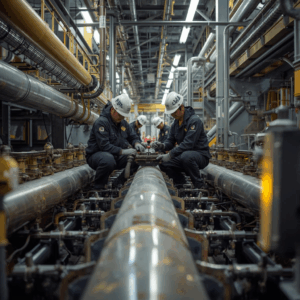
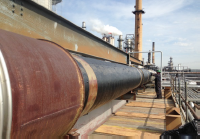
Pipelines are the backbone of countless industries, transporting everything from water and gas to chemicals and oil. But without proper protection, even the most robust piping systems can fall victim to corrosion, wear, and environmental damage. That’s where industrial pipe wrapping comes in.
Whether you’re managing an aging infrastructure or installing new pipelines, choosing the right wrapping technique can mean the difference between decades of reliable service and costly, premature failures. From traditional methods to innovative on line industrial piping solutions, understanding your options is essential for maintaining long-term pipeline integrity.
In this post, we’ll explore the most effective pipe wrapping techniques available today, helping you make informed decisions that protect your investment and keep your operations running smoothly.
Key Takeaways
- Industrial pipe wrapping protects pipelines from corrosion, mechanical damage, and environmental factors, extending their operational lifespan significantly.
- Multiple wrapping techniques exist, including tape systems, heat-shrink sleeves, and epoxy coatings, each suited to different applications and conditions.
- Professional application and regular maintenance are crucial for ensuring wrapping systems perform as intended over the long term.
Why Pipeline Protection Matters
Unprotected pipelines face a constant barrage of threats. Moisture, chemicals, temperature fluctuations, and physical impacts all contribute to degradation over time. Corrosion alone costs industries billions annually in repairs, replacements, and lost productivity.
Effective pipe wrapping acts as a barrier against these hazards. It shields the metal surface from corrosive elements, provides mechanical cushioning, and in some cases, offers electrical insulation. The right wrapping system doesn’t just prevent damage—it actively extends the service life of your piping infrastructure.
Common Industrial Pipe Wrapping Techniques
Tape Wrapping Systems
Tape wrapping remains one of the most versatile and widely used methods for pipeline protection. These systems typically consist of a primer coat followed by one or more layers of specialized tape.
Polyethylene (PE) tape offers excellent moisture resistance and is commonly used for buried pipelines. It’s cost-effective and relatively easy to apply, making it popular for both new installations and rehabilitation projects.
Petrolatum tape provides superior corrosion protection, particularly for irregular surfaces and fittings. Its self-healing properties allow it to flow into surface irregularities, creating a complete seal even on challenging geometries.
Butyl rubber tape excels in applications requiring conformability and long-term adhesion. It’s particularly effective in harsh environments where temperature extremes or chemical exposure are concerns.
The key to successful tape wrapping lies in proper surface preparation and application technique. The pipe surface must be clean, dry, and free from contaminants. Overlapping each wrap by at least 50% ensures complete coverage without gaps that could compromise protection.
Heat-Shrink Sleeve Systems
Heat-shrink sleeves offer a more advanced solution for pipeline protection. These systems consist of a polyethylene or polypropylene outer layer with a heat-activated adhesive inner coating.
During installation, the sleeve is positioned over the pipe and heated using specialized equipment. As it heats, the sleeve contracts tightly around the pipe while the adhesive melts and bonds to the surface. This creates a seamless, watertight barrier that conforms perfectly to the pipe’s contours.
Heat-shrink systems excel at protecting field joints, pipeline repairs, and areas where mechanical damage risk is high. They’re particularly valuable for on line industrial piping solutions where minimal disruption to operations is essential.
Epoxy Coating Systems
Fusion-bonded epoxy (FBE) coatings provide exceptional corrosion resistance through a thermally applied polymer layer. The process involves heating the pipe to a specific temperature, then applying epoxy powder that melts and fuses to the surface.
Once cured, FBE creates a hard, durable coating with excellent adhesion and chemical resistance. It’s commonly used for new pipeline construction, particularly for underground and submerged applications where long-term protection is critical.
Three-layer polyethylene (3LPE) systems build on FBE technology by adding a copolymer adhesive layer and a polyethylene topcoat. This combination delivers superior mechanical protection alongside FBE’s corrosion resistance.
Liquid Coating Systems
Liquid-applied coatings offer flexibility for complex geometries and difficult-to-access areas. These systems include polyurethanes, epoxies, and specialty formulations designed for specific environmental conditions.
Spray or brush application makes liquid coatings ideal for fittings, valves, and pipeline sections where other methods prove challenging. Multiple coats build up the required thickness while conforming to every surface detail.
Cure times vary depending on the product and environmental conditions, but once fully cured, liquid coatings provide robust protection comparable to other wrapping methods.
Choosing the Right Technique
Selecting the appropriate pipe wrapping technique depends on several factors:
Operating environment: Underground, above-ground, submerged, and exposed pipelines each face different challenges. Consider moisture levels, soil chemistry, temperature ranges, and UV exposure.
Pipeline material and condition: New steel pipes accept coatings differently than aged or corroded surfaces. Some techniques require specific surface profiles or cannot be applied to certain materials.
Budget and timeline: Initial costs vary significantly between methods. However, consider long-term maintenance requirements and expected service life when evaluating true cost-effectiveness.
Regulatory requirements: Industry standards and local regulations may mandate specific coating types or performance criteria. Verify compliance before selecting a system.
Application constraints: Can the pipeline be taken offline? Is the work area confined? These practical considerations often influence which techniques are feasible.
SEALTEC’s Approach to Pipeline Protection
At SEALTEC, we understand that every pipeline presents unique protection challenges. Our team specializes in both traditional and innovative on line industrial piping solutions, ensuring minimal disruption to your operations.
We assess each project individually, considering your specific operating conditions, budget parameters, and long-term maintenance goals. Whether you need comprehensive new installation protection or targeted rehabilitation of existing infrastructure, we match the right wrapping technique to your requirements.
Our experienced technicians follow industry best practices for surface preparation and application, ensuring every wrap, sleeve, or coating performs as designed. We also provide ongoing maintenance support to help you monitor coating condition and address issues before they escalate.
Maintenance and Monitoring
Even the best pipe wrapping systems require periodic inspection and maintenance. Establishing a regular monitoring program helps identify potential problems early, when repairs are simpler and less expensive.
Visual inspections should check for coating damage, disbondment, or mechanical impacts. Many systems also benefit from electrical testing methods that detect coating defects without excavation.
Document all inspections and maintain detailed records of coating type, application date, and any repairs performed. This information proves invaluable for planning future maintenance and evaluating coating performance over time.
When damage occurs, prompt repair prevents localized corrosion from spreading. Many systems support patch repairs using compatible materials, extending overall coating life without complete replacement.
Protecting Your Pipeline Investment
Industrial pipe wrapping isn’t just about preventing corrosion—it’s about protecting the significant investment your pipeline represents. The right wrapping technique, properly applied and maintained, can add decades to your pipeline’s service life while reducing maintenance costs and operational disruptions.
As pipeline technologies and coating materials continue advancing, staying informed about new techniques and products helps you make decisions that balance immediate needs with long-term performance.
Whether you’re planning new construction, rehabilitating aging infrastructure, or seeking more effective on line industrial piping solutions, investing time in selecting and implementing the optimal pipe wrapping strategy pays dividends through reliable, long-lasting pipeline integrity.
Ready to discuss protection options for your specific pipeline needs? Contact SEALTEC today to schedule a consultation with our pipeline protection specialists.