Hospital infrastructure operates around the clock, with no margin for error when it comes to critical systems. Among the most vital yet often overlooked components are the pipeline networks that deliver medical gases, water, steam, and other essential fluids throughout the facility. When these systems require maintenance or upgrades, the challenge becomes how to execute necessary work without disrupting patient care or compromising safety standards.
Strategic planning for hospital pipeline repairs and upgrades requires a comprehensive approach that balances operational continuity with infrastructure needs. Healthcare facilities must navigate complex regulatory requirements, maintain sterile environments, and ensure uninterrupted service delivery while addressing aging or failing pipeline systems.
The stakes couldn’t be higher. A single disruption to oxygen lines, medical air systems, or sterile water supplies can force entire departments to shut down, potentially endangering patient lives and resulting in significant financial losses. This reality makes traditional “shut down and repair” approaches impractical for most hospital environments.
Key Takeaways
- Industrial pipe freezing enables repairs without system shutdown, allowing hospitals to maintain critical operations while addressing pipeline issues in targeted sections.
- Comprehensive planning phases minimize disruption by coordinating repairs during low-census periods and implementing redundant systems where possible.
- Specialized techniques and materials designed for healthcare environments ensure repairs meet stringent regulatory standards while maximizing system longevity.
Understanding Hospital Pipeline Complexity
Hospital pipeline systems represent some of the most complex industrial piping networks in operation. These systems typically include medical gas distribution (oxygen, nitrogen, medical air), vacuum systems, steam distribution, domestic and sterile water supplies, and specialized fluid delivery systems for laboratories and surgical suites.
Each pipeline serves critical functions that directly impact patient care. Medical gas lines must maintain precise pressure levels and purity standards. Water systems require continuous flow for sterilization processes, patient care, and emergency situations. Steam distribution supports heating, sterilization, and humidity control throughout the facility.
The regulatory environment adds another layer of complexity. Healthcare facilities must comply with Joint Commission standards, NFPA 99 requirements for medical gas systems, and local building codes. Any repair or upgrade work must maintain these compliance standards while preserving system integrity.
Challenges in Hospital Pipeline Maintenance
Traditional pipeline maintenance approaches create significant challenges in healthcare settings. Complete system shutdowns are often impossible when patient care depends on continuous service. Even partial shutdowns can force departments to relocate patients, cancel procedures, or implement costly temporary systems.
Emergency repairs compound these challenges. When a critical pipeline fails unexpectedly, hospitals face immediate pressure to restore service while maintaining patient safety. The urgency of these situations often leads to temporary fixes that may not address underlying system issues.
Budget constraints further complicate planning efforts. Hospital administrators must balance infrastructure investments with direct patient care needs, often deferring maintenance until problems become critical. This reactive approach typically results in higher costs and greater disruption than proactive maintenance strategies.
Strategic Approaches to Pipeline Planning
Effective hospital pipeline repair strategies begin with comprehensive system assessment and risk analysis. Facilities should conduct regular inspections to identify potential failure points before they become critical. This proactive approach allows for planned maintenance during optimal timing windows.
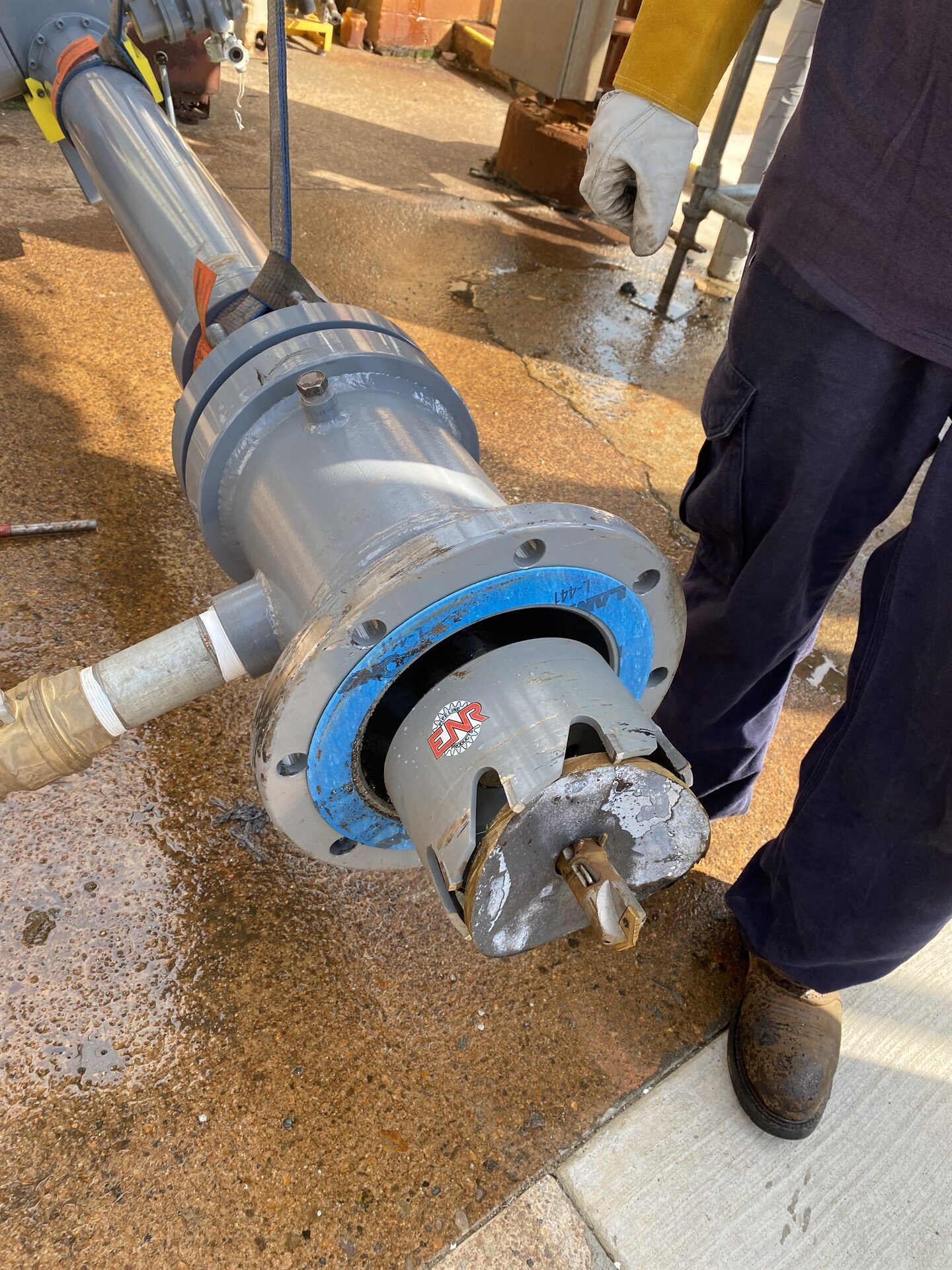
On line industrial piping solutions have revolutionized how hospitals approach pipeline maintenance. These techniques allow repairs and upgrades to proceed while systems remain operational, eliminating the need for costly shutdowns and service interruptions.
Risk prioritization helps hospitals focus resources on the most critical systems first. Medical gas lines and emergency water supplies typically receive top priority, followed by systems that support essential services like operating rooms and intensive care units.
Timing coordination becomes crucial for minimizing impact. Many hospitals schedule major pipeline work during periods of lower patient census, such as holiday weeks or planned maintenance windows. Some facilities coordinate with seasonal patterns, addressing outdoor pipeline issues during favorable weather conditions.
Industrial Pipe Freezing Technology
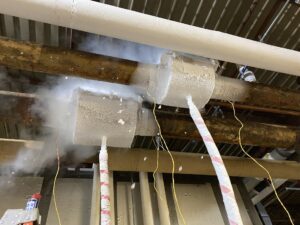
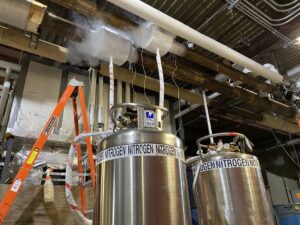
Industrial pipe freezing has emerged as a game-changing technology for hospital pipeline repair projects. This technique creates temporary ice plugs within the pipeline, isolating specific sections for repair while maintaining flow to the rest of the system.
The process works by applying specialized freezing equipment to the exterior of the pipe, creating solid ice barriers that can withstand significant pressure. These ice plugs effectively isolate the work area, allowing technicians to cut, repair, or replace pipeline sections without draining the entire system.
For hospitals, this technology offers unprecedented flexibility. Critical medical gas lines can undergo repairs while continuing to serve other areas of the facility. Water systems can be sectioned off for maintenance without affecting patient care areas. The technique works on various pipe materials and sizes commonly found in healthcare facilities.
Safety considerations are paramount when implementing pipe freezing in hospital environments. The process must account for the sterile requirements of healthcare settings, potential temperature effects on nearby equipment, and the need to maintain system pressure and flow characteristics throughout the procedure.
Implementation Best Practices
Successful hospital pipeline repair projects require detailed planning phases that address every aspect of the work. Pre-project assessment should include system mapping, flow analysis, and identification of critical connection points that cannot be interrupted.
Communication protocols become essential during hospital pipeline projects. All affected departments must receive advance notice of planned work, including any potential service interruptions or changes to normal operations. Emergency response plans should account for unexpected complications or extended repair timeframes.
Material selection plays a critical role in hospital pipeline upgrades. Components must meet healthcare-specific requirements for purity, corrosion resistance, and regulatory compliance. Many facilities opt for premium materials that offer extended service life, reducing the frequency of future repairs.
Quality control measures ensure that repairs meet hospital standards and regulatory requirements. This includes pressure testing, flow verification, and contamination checks before returning systems to full operation.
Regulatory Compliance and Documentation
Hospital pipeline repair projects must maintain strict documentation throughout the process. Regulatory bodies require detailed records of materials used, testing procedures, and verification that all work meets applicable standards.
Compliance verification includes multiple checkpoints during the repair process. Initial system isolation must be confirmed before work begins. Material certifications must be verified for all components installed. Final testing must demonstrate that repaired systems meet or exceed original specifications.
Documentation requirements extend beyond the immediate repair project. Hospitals must update system drawings, maintenance records, and operational procedures to reflect any changes made during the upgrade process.
Long-term System Optimization
Strategic pipeline planning should address long-term system optimization opportunities. Upgrade projects provide chances to improve system efficiency, add redundancy for critical services, and incorporate new technologies that enhance reliability.
Energy efficiency considerations can significantly impact operational costs over time. Modern pipeline materials and design approaches often reduce pumping requirements, heat loss, and maintenance needs compared to older systems.
Preventive maintenance programs help maximize the return on pipeline upgrade investments. Regular inspection schedules, component replacement programs, and performance monitoring can extend system life and prevent unexpected failures.
Building Resilient Hospital Infrastructure
Hospital pipeline systems form the circulatory system of healthcare facilities, delivering essential services that directly impact patient outcomes. Strategic planning for repairs and upgrades requires balancing immediate operational needs with long-term infrastructure goals.
Modern techniques like industrial pipe freezing and on line industrial piping solutions have transformed what’s possible in hospital maintenance. These approaches allow facilities to maintain critical operations while addressing infrastructure needs, eliminating the traditional trade-off between patient care and system maintenance.
The investment in strategic pipeline planning pays dividends through improved reliability, reduced emergency repairs, and enhanced patient safety. Healthcare facilities that embrace proactive maintenance approaches position themselves for sustained operational excellence while meeting the evolving demands of modern medicine.