Industrial maintenance is not for the faint of heart. It involves heavy machinery, high-pressure environments, and tight deadlines. When you bring the machine shop to the field, the variables multiply, and so does the risk. Field machining is a critical service for minimizing downtime in industries like oil and gas, power generation, and petrochemicals, but it requires a rigorous commitment to safety.
Unlike a controlled shop environment, the field is unpredictable. Weather conditions change, workspaces are often confined or elevated, and simultaneous operations (SIMOPS) can create conflicting hazards. For an online industrial piping contractor, ensuring the safety of the crew and the integrity of the asset is the top priority.
This guide explores the essential safety protocols that define professional field machining operations. We will look at how preparation, equipment handling, and on-site awareness come together to prevent accidents and ensure project success.
Key Takeaways
- Risk Assessment is Non-Negotiable: Every job starts with a thorough Job Safety Analysis (JSA) to identify site-specific hazards before a single tool is lifted.
- Equipment Integrity Matters: Regular inspection and maintenance of portable machining tools prevent catastrophic mechanical failures during operation.
- PPE and Training: The right gear and specialized training—particularly for confined spaces and hot work—are the last line of defense against injury.
The Unique Risks of Field Machining
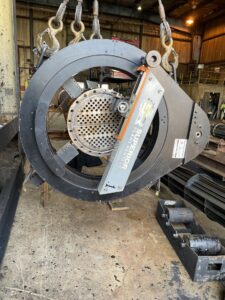
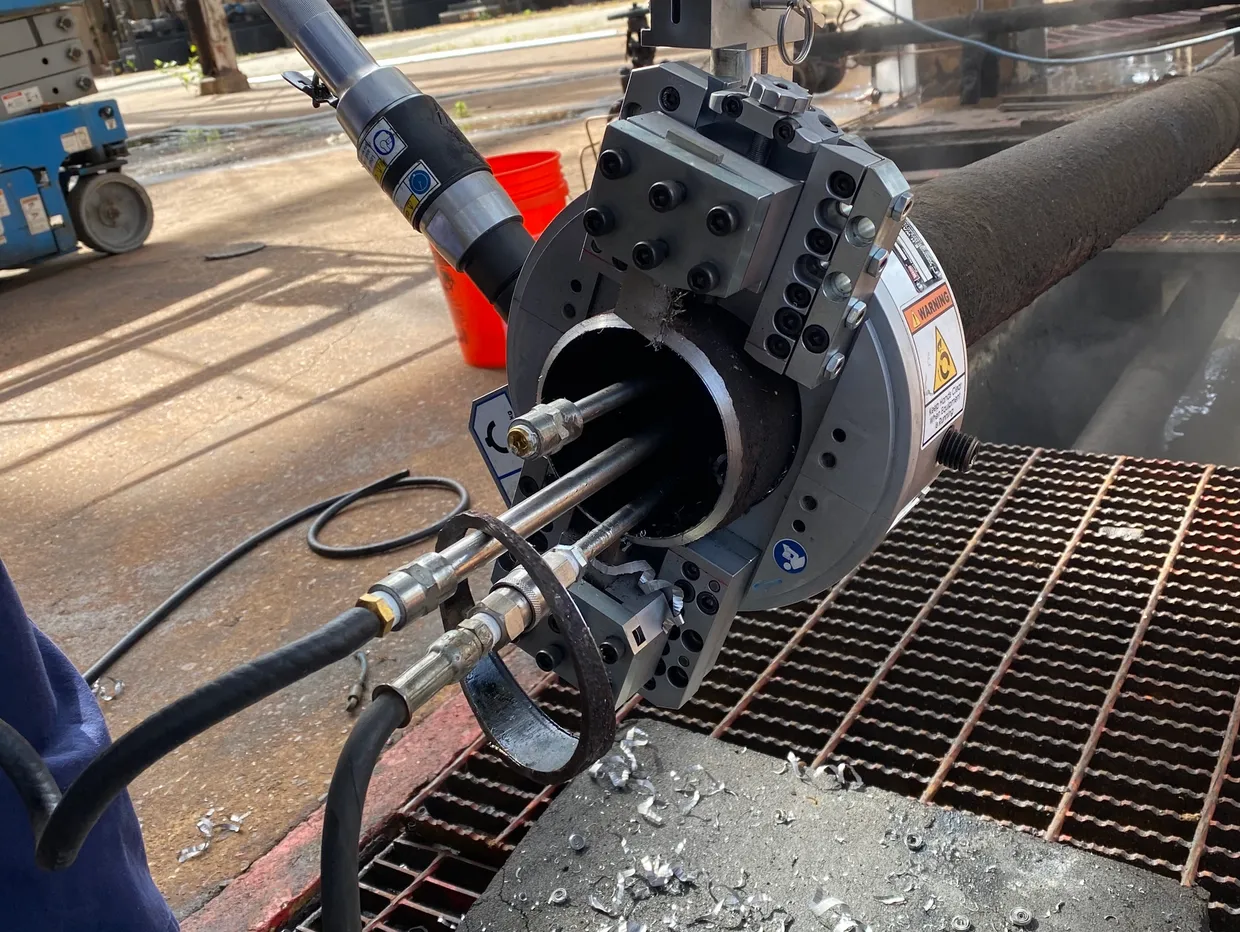
To understand safety protocols, we first need to understand the environment. Field machining involves taking portable machine tools—like flange facers, pipe cutters, and line boring machines—directly to the equipment that needs repair.
This often happens while the plant is still live or in a turnaround state. The risks include:
- Rotating Machinery: Portable tools have exposed moving parts that can catch loose clothing or gloves.
- Flying Debris: Cutting metal produces hot, sharp chips that can travel at high speeds.
- Stored Energy: Pipelines may contain residual pressure or hazardous chemicals.
- Ergonomic Hazards: Technicians often work in awkward positions, lifting heavy components in tight spaces.
Pre-Job Planning and Risk Assessment
Safety doesn’t start when the machine turns on; it starts during the planning phase. Before SEALTEC technicians arrive on site, a comprehensive risk assessment takes place.
Job Safety Analysis (JSA)
A JSA is a systematic procedure that breaks down every step of the job. For a field machining task, this might look like:
- Setup: Identifying lifting points and ensuring the mounting surface is stable.
- Operation: determining the safe speed and feed rates for the specific material.
- Demobilization: Planning how to safely remove hot, heavy equipment.
By identifying the hazards associated with each step, the team can implement controls to mitigate them.
Lockout/Tagout (LOTO)
One of the most critical protocols for any online industrial piping contractor is isolation. Before machining begins on a valve, pump, or flange, the system must be isolated from energy sources. This prevents the equipment from being energized or pressurized while technicians are working on it. LOTO procedures verify that all valves are closed, breakers are off, and energy is dissipated.
Operational Safety Protocols
Once the planning is done and the permits are signed, the physical work begins. Here are the standard operating procedures that keep the crew safe.
Machine Mounting and Stability
Field machining tools utilize high torque. If a machine is not mounted correctly, it can break loose, causing severe injury to the operator and damage to the asset. Technicians must ensure that:
- Mounting surfaces are clean and free of debris.
- Clamping jaws or bolts are torqued to the manufacturer’s specifications.
- The setup is rigid enough to handle the cutting forces without vibration.
Chip Management
The byproduct of machining is metal chips. In a field environment, these chips can be long, razor-sharp ribbons of steel that are incredibly hot. Operators must never use their hands to clear chips. Instead, they use specialized chip hooks or brushes. Furthermore, chip guards and shields should be installed whenever possible to direct debris away from personnel and sensitive equipment below.
Controlled Areas
Field machining creates a hazard zone. This area should be clearly marked with barricade tape or signage. Only essential personnel involved in the operation should be inside this perimeter. This protects bystanders from flying debris or accidental contact with rotating equipment.
Personal Protective Equipment (PPE)
Engineering controls and administrative protocols are the first line of defense, but Personal Protective Equipment (PPE) is the final barrier between the worker and the hazard.
Standard PPE for field machining includes:
- Eye and Face Protection: Safety glasses with side shields are mandatory. A face shield is often added when performing heavy cutting operations to protect against hot chips.
- Hearing Protection: Portable pneumatic and hydraulic motors can be loud. Earplugs or earmuffs prevent long-term hearing damage.
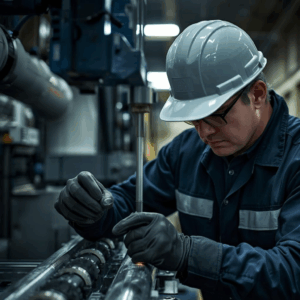
- Hand Protection: While gloves protect against cuts from handling material, they must be used cautiously near rotating machinery. Loose gloves can get caught in the spindle. Form-fitting, cut-resistant gloves are the industry standard.
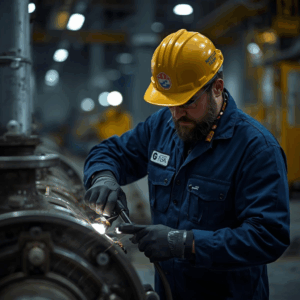
- Flame-Resistant Clothing (FRC): In oil and gas environments, FRC is essential to protect against flash fires.
Training and Competency
The best equipment in the world is unsafe in untrained hands. Field machining is a skilled trade that requires specific knowledge of metallurgy, geometry, and machine tool dynamics.
At SEALTEC, training goes beyond just knowing how to cut metal. It includes:
- Emergency Response: Knowing what to do if a hydraulic hose bursts or a machine binds up.
- Permit Awareness: Understanding the specific requirements of hot work permits and confined space entry.
- Stop Work Authority: Empowering every member of the team, regardless of rank, to stop the job if they see an unsafe condition. This culture of psychological safety is just as important as physical safety barriers.
Equipment Maintenance and Inspection
Safety protocols also extend to the tools themselves. Field machining equipment takes a beating. It travels in trucks, gets hoisted by cranes, and operates in dirty environments.
Before any tool is sent to the field, it undergoes a rigorous inspection:
- Hydraulic Hoses: Checked for cracks, leaks, or bulges. High-pressure injection injuries are a serious risk if a hose fails.
- Electrical Cords: Inspected for fraying or exposed wiring to prevent shock hazards.
- Tool Bits: Dull tooling requires more force to cut, which increases the load on the machine and the mounting system. Sharp, correct tooling is safer tooling.
The Role of Communication
In the noisy, complex environment of an industrial plant, clear communication is vital. Hand signals must be agreed upon before the noise starts. Radios should be tested.
Simultaneous Operations (SIMOPS) meetings are crucial. If a crane is lifting a load overhead while the machining crew is working below, or if X-ray testing is happening nearby, schedules need to be coordinated to prevent conflicting hazards.
A Culture of Safety
Safety in field machining is not a checklist; it is a mindset. It requires constant vigilance and a refusal to cut corners, even when the schedule is tight. By adhering to strict protocols regarding risk assessment, equipment setup, PPE, and training, an online industrial piping contractor can deliver high-quality results without compromising human wellbeing.
When you hire a partner for on-site repairs, ensure their safety culture aligns with yours. A safe job is a professional job, and at SEALTEC, we believe that no repair is worth an injury.