Manufacturing downtime costs companies an average of $50,000 per hour, yet many facilities still shut down entire systems for equipment repairs that could be completed on-site. Field machining offers a powerful alternative—bringing precision machining capabilities directly to your equipment, eliminating the need for costly system shutdowns and equipment removal.
This comprehensive approach to equipment maintenance and repair has revolutionized how industries handle everything from routine maintenance to emergency repairs. By understanding the benefits, applications, and best practices of field machining, you can make informed decisions that protect your bottom line and keep operations running smoothly.
Key Takeaways
- Field machining eliminates costly downtime by performing precision repairs directly on-site without removing equipment from service
- On-site machining services cover diverse applications from pipeline repairs to turbine maintenance across multiple industries
- Professional field machining teams provide specialized equipment and expertise that often exceeds what’s possible with traditional repair methods
What is Field Machining?
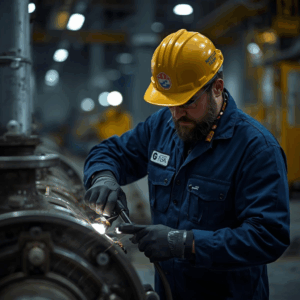
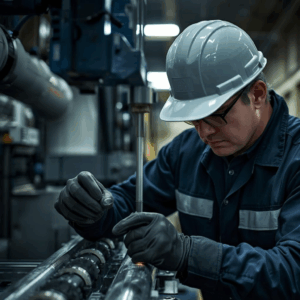
Field machining, also known as on-site machining, involves bringing portable precision machining equipment directly to your facility to perform repairs, modifications, or maintenance work on installed equipment. Rather than dismantling machinery and transporting it to a machine shop, skilled technicians use specialized portable tools to complete work with the equipment in place.
This approach transforms how facilities handle equipment maintenance. Traditional repair methods often require extensive disassembly, transportation logistics, and extended downtime periods. Field machining eliminates these challenges by bringing the machine shop to you.
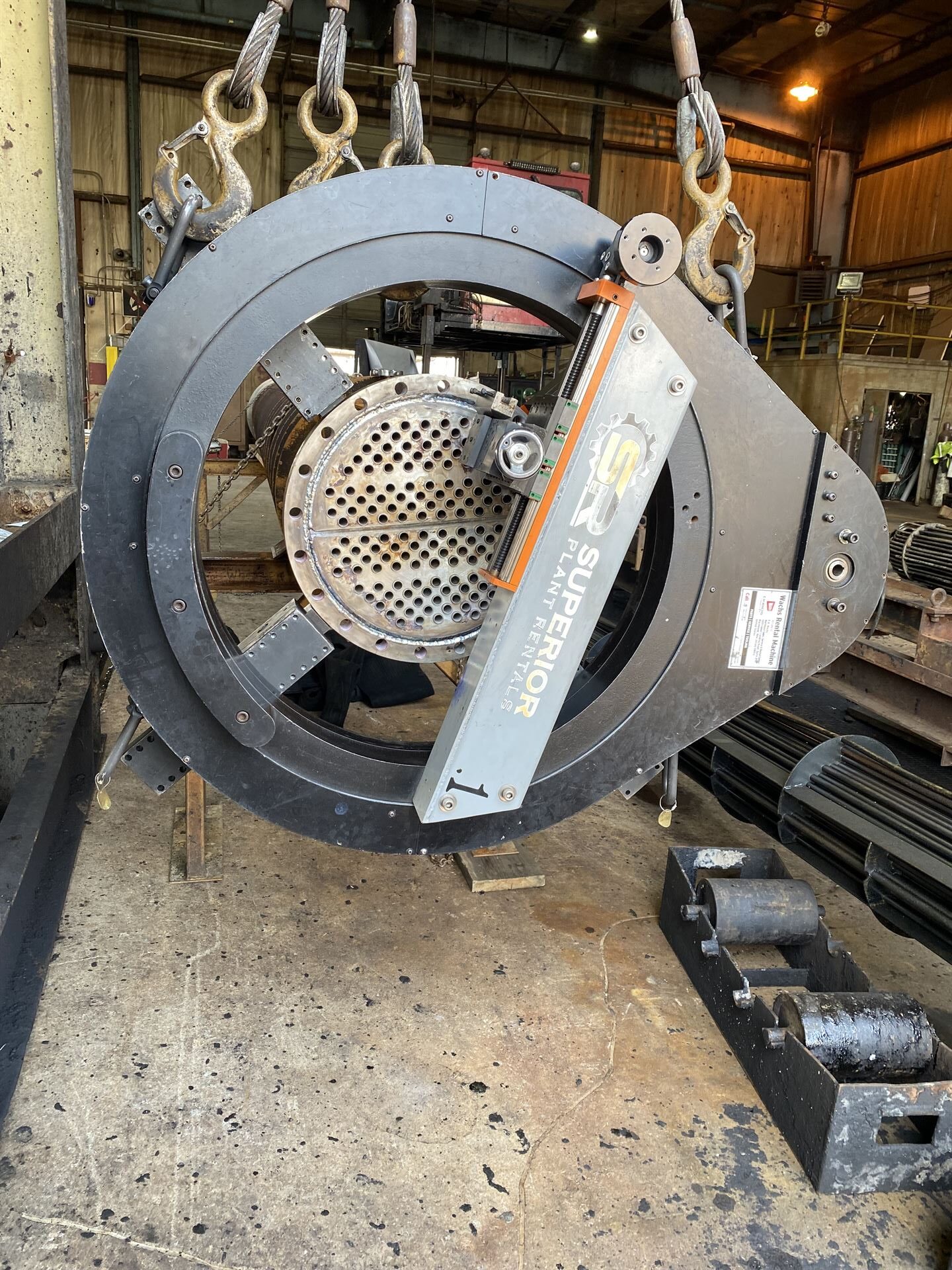
The process typically involves highly trained technicians who arrive with portable lathes, boring machines, milling equipment, and other specialized tools designed for on-site use. These professionals can perform complex machining operations with precision that matches or exceeds traditional shop-based work.
Industries That Benefit from On-Site Machining
Power Generation
Power plants rely heavily on field machining services for turbine maintenance, generator repairs, and pipeline modifications. The ability to perform precision work without shutting down entire power generation systems provides enormous value to utility companies and their customers.
Steam turbines, gas turbines, and hydroelectric equipment all benefit from on-site machining capabilities. Technicians can resurface critical components, repair damaged surfaces, and perform modifications that extend equipment life without the massive costs associated with complete system shutdowns.
Oil and Gas
Refineries, petrochemical plants, and offshore platforms use field machining for pipeline repairs, valve modifications, and equipment maintenance. The harsh operating environments in these facilities make on-site repairs particularly valuable, as removing equipment for shop-based repairs can be extremely challenging and expensive.
Critical applications include flange facing, pipeline modifications, and emergency repairs to process equipment. The ability to respond quickly with portable machining equipment can mean the difference between a minor repair and a major production loss.
Manufacturing
Manufacturing facilities across industries benefit from field machining services for equipment maintenance, production line modifications, and emergency repairs. Automotive, aerospace, food processing, and heavy manufacturing operations all utilize these services to minimize production disruptions.
Common applications include machine tool repairs, conveyor system modifications, and precision alignment work. Field machining allows manufacturers to address equipment issues during scheduled maintenance windows rather than creating unplanned downtime.
Maritime
Shipyards, ports, and vessel operators use on-site machining for propeller repairs, engine maintenance, and structural modifications. The maritime industry’s unique challenges—including limited access to traditional machining facilities and the high cost of dry-docking—make field machining an essential service.
Core Field Machining Services
Flange Facing
Flange facing represents one of the most common field machining applications. Damaged or warped flanges can cause dangerous leaks in pressurized systems, but replacing entire pipe sections creates enormous downtime and costs.
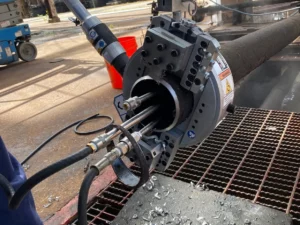
Portable flange facing machines can resurface flanges to precise specifications while the piping system remains in place. This service ensures proper sealing surfaces and maintains system integrity without the expense of complete component replacement.
Line Boring
Line boring creates precise holes through multiple components or repairs existing bores that have become damaged or misaligned. This service is critical for equipment that requires precise alignment, such as turbine assemblies or large rotating machinery.
Portable line boring equipment can handle diameters from small precision holes to large openings several feet across. The ability to perform this work on-site eliminates the need for complete equipment disassembly.
Hot Tapping
Hot tapping allows technicians to create new connections in pressurized piping systems without shutting down the process. This specialized field machining technique enables facility modifications and repairs while maintaining full system operation.
The process requires precise machining under pressure, making it one of the most technically demanding field machining applications. Professional teams bring specialized equipment and extensive safety protocols to ensure successful operations.
Emergency Repairs
Equipment failures don’t follow convenient schedules. Emergency field machining services provide rapid response capabilities for critical equipment failures that could otherwise result in extended downtime.
Emergency services might include shaft repairs, housing modifications, or precision alterations needed to get equipment back into service quickly. The speed advantage of on-site work becomes particularly valuable during unplanned outages.
Advantages of Field Machining Over Traditional Methods
Elimination of Downtime
The most significant advantage of field machining is the dramatic reduction or complete elimination of system shutdowns. While traditional repairs might require days or weeks of downtime, field machining often allows repairs to be completed during normal maintenance windows or even while systems remain operational.
Cost Savings
Beyond the obvious savings from reduced downtime, field machining eliminates transportation costs, rigging expenses, and the logistics challenges associated with moving large equipment. Many repairs that might cost hundreds of thousands of dollars using traditional methods can be completed for a fraction of that expense.
Precision and Quality
Modern portable machining equipment delivers precision that equals or exceeds traditional shop-based tools. Computerized controls, laser measurement systems, and advanced cutting technologies ensure that field machining produces high-quality results.
Flexibility and Accessibility
Field machining teams can access equipment in locations where removal would be extremely difficult or impossible. Underground installations, equipment in confined spaces, or systems integrated into larger assemblies can all be serviced using portable machining techniques.
Choosing the Right Field Machining Partner
Technical Expertise
Look for service providers with extensive experience in your specific industry and application types. Field machining requires not just machining skills but also deep understanding of the equipment being serviced and the operating environment.
Equipment Capabilities
Ensure your field machining partner has the right equipment for your specific needs. This includes not just basic machining tools but also specialized equipment for unique applications like hot tapping or large-diameter boring.
Safety Protocols
Field machining often takes place in challenging industrial environments with specific safety requirements. Your service provider should have comprehensive safety programs and experience working in your type of facility.
Response Capabilities
For emergency situations, response time becomes critical. Choose a field machining partner with the geographic coverage and staffing levels needed to provide rapid emergency response when required.
Maximizing Your Field Machining Investment
Regular preventive maintenance using field machining techniques can prevent minor issues from becoming major failures. Work with your field machining partner to develop maintenance schedules that address potential problems before they result in unplanned downtime.
Consider field machining options during the planning phases of facility modifications or upgrades. What might seem like a job requiring equipment removal could often be completed more efficiently using on-site machining techniques.
The Future of On-Site Machining
Field machining represents a fundamental shift toward more efficient, cost-effective equipment maintenance and repair strategies. As portable machining technology continues advancing and more facilities recognize the benefits, on-site machining will become an increasingly important part of industrial maintenance programs.
The combination of precision, speed, and cost-effectiveness makes field machining an essential capability for modern industrial operations. Whether addressing emergency repairs or planned maintenance, these services provide the flexibility and efficiency needed to maintain competitive operations in demanding industrial environments.